When it comes to working in moving water, there’s no room for shortcuts. The Ridenbaugh Canal Modernization Project in Boise, Idaho, is the kind of heavy civil job that demands real planning, real equipment, and crews willing to get after it in tough conditions. That’s where Portadam came in.
Portadam is proud to support the modernization of the nearly 100-year-old Ridenbaugh Diversion Dam, a critical piece of infrastructure that helps deliver irrigation water across more than 46,000 acres throughout Idaho’s Treasure Valley. The $20.9 million project will replace the aging manual diversion system with a modern automated structure designed to improve safety, increase efficiency, and strengthen long-term water management across the region.
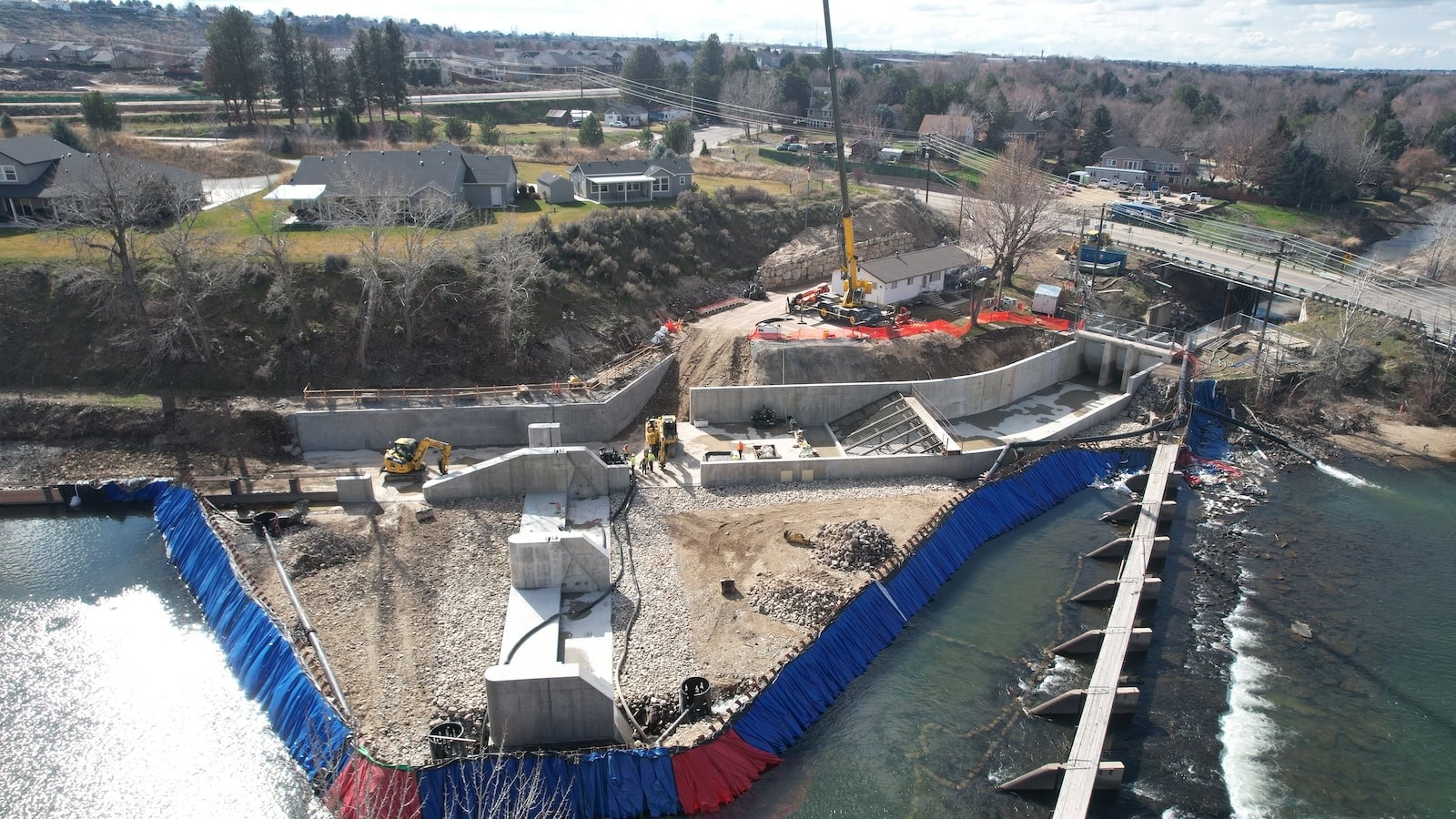
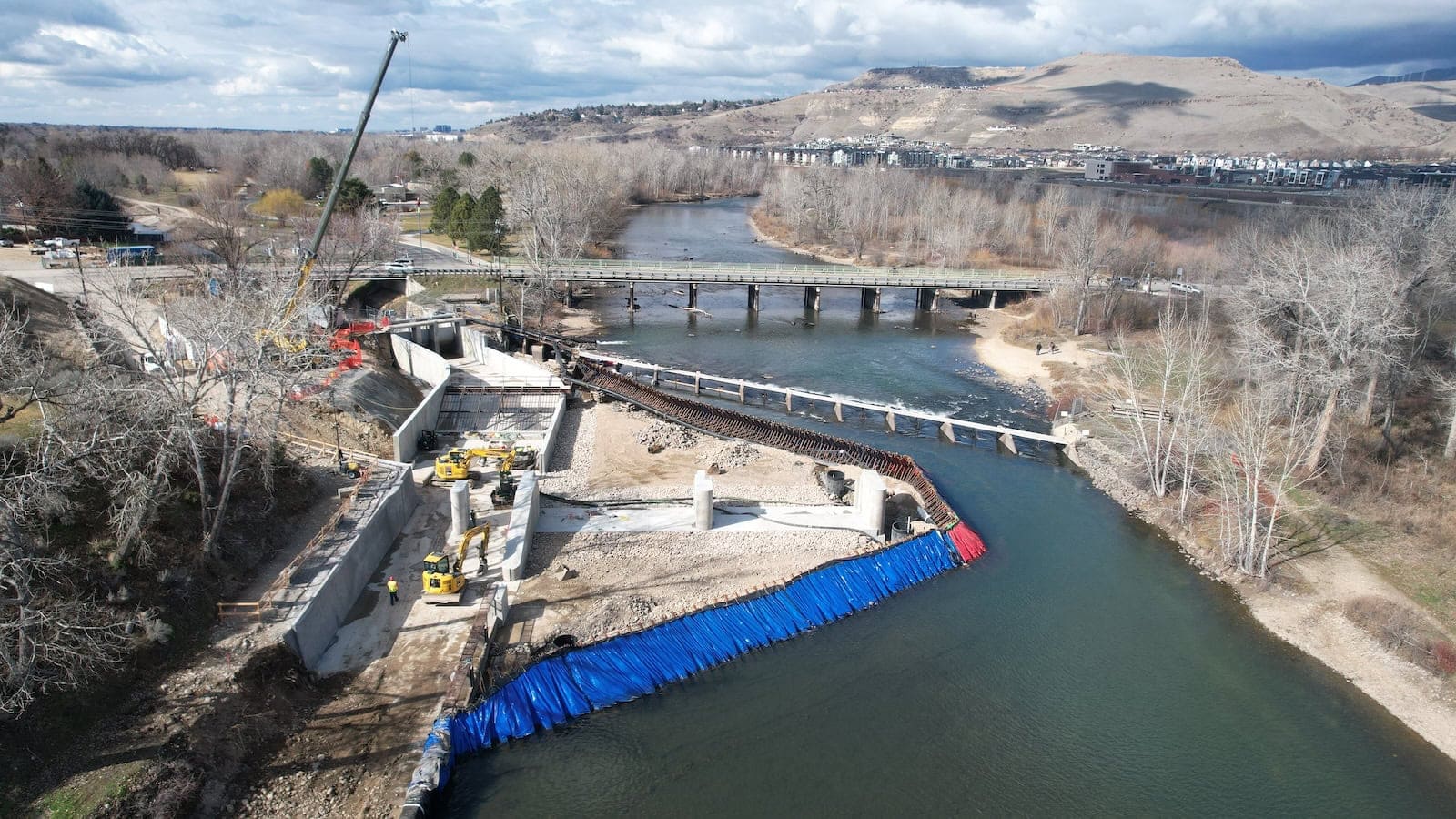
This wasn’t a simple setup.
Crews faced difficult access conditions working directly in the Boise River, where heavy equipment had to be mobilized into active water flows and positioned with crane support to install forms and carry out construction operations. A bypass canal capable of handling roughly a quarter of the river flow also had to be constructed to keep the project moving during phased construction.
That’s the kind of environment where dependable water control matters.
For over 45 years, Portadam’s temporary cofferdam system has helped crews isolate work zones, dewater construction areas, and safely access critical sections of the river during demolition and reconstruction activities. In-water construction always brings challenges, changing river conditions, difficult footing, limited access, and tight schedules, but having the right system in place keeps the job moving safely and efficiently.
The modernization effort will replace the old checkboard dam system, which previously required workers to manually install and remove 20-foot boards by hand, often in dangerous conditions. The new structure will feature automated crest gates, an ogee weir, upgraded sediment control systems, and improved debris management technology.
Construction is being completed in multiple phases. According to project planning notes, the first phase focused on dam wall construction, followed by installation of the weir structure and gate systems.
For Portadam, projects like this are exactly what the system was built for — helping contractors take control of difficult water conditions so major infrastructure work can get done safely, efficiently, and on schedule. From river diversions to dam reconstruction, Portadam continues to support the crews building and upgrading the infrastructure that keeps communities running.